Grunge Lessons for Life

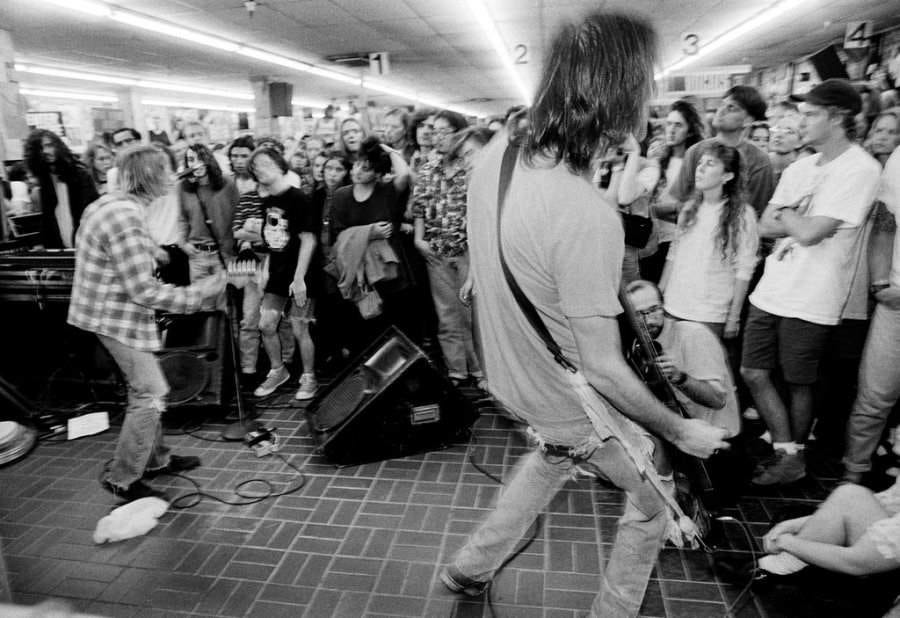
Grunge music changed my life.
Nirvana’s blockbuster album, Never Mind, was a revelation. Pearl Jam Ten moved me deeply. Lollapalooza, an alternative music festival, offered community in dusty fields. Seattle, the birthplace of grunge, provided a spiritual and professional home.
Grunge is a time, a place, a sound, an ethos, an inspiration, a philosophy. It’s a rainy day, a snow-capped mountain, a sweaty mosh pit, a fuzzed out guitar, a ferry gliding across Elliot Bay.
Grunge is a cultural movement. An argument for free expression. A beacon for those who think differently. A plea for authenticity. A proof point for the power of community.
Incubated in the remote, ruggedly beautiful Pacific Northwest, grunge shaped how I think and how I lead.
Musically, I can draw a straight line from Chuck Berry, Elvis, the Beatles, Neil Young, Led Zeppelin, the Clash, Black Flag and the Replacements to Pearl Jam, Nirvana, Soundgarden and Alice in Chains.
Geographically, I can trace a path from the Mississippi Delta to Memphis to Liverpool to New York City to Minneapolis to Seattle. Grunge bands created a watershed moment and enduring influence in popular music akin to Beatlemania, Woodstock and Punk.
Grunge bands used drums, bass and guitar to reclaim our humanity, as the great bands always do. They reminded us that rock’s true subversive mission has always been nothing short of changing the world.
This movement from the great Pacific Northwest found me in my twenties, a time of innocence, optimism, insecurity and soul searching. Who do I want to be? Who do I want to be with? What do I stand for? What are my non-negotiables?
Today I share the lessons I’ve learned from grunge, and how it has shaped me as a leader.
Rain, Isolation, Community
In the 1980’s, Seattle sat outside the musical mainstream -- or any mainstream.
Tucked amid mountain ranges on the far northwest corner of the US, Seattle was the ideal place to incubate a new sound and ethos, untouched by commerce or fashion.
The Seattle sound originated in clubs and bands most people have never heard of. The Metropolis. Gorilla Garden. Malfunkshun. Green River. The U-Men. Mother Love Bone.
When I read oral histories of the early grunge scene, I see the power of community. People who went to high school together. People who formed bands in garages to explore music with their friends. People committed to their art and their hometown.
These bands influenced each other. They went to each other’s shows. They shared common values around authenticity, experimentation, lack of pretention and music with emotional impact.
The indie music label Sub Pop provided an anchor for these bands with its raw production, commitment to the Pacific Northwest and development of an emotionally powerful sound.
In short, grunge showed me the power of community, of creating the conditions and support needed for innovation to blossom. They showed how grassroots movements and communities of purpose can change the world.
Authenticity
Grunge emerged as a reaction to polished, homogenized music without edge or soul. It borrowed from and expanded on punk and hardcore. The grunge movement embraced rawness and honesty—both musically and personally.
Seattle’s bands were influenced and inspired by indie bands that preceded them. Bands like Black Flag, the Replacements, Husker Du and the Meat Puppets. They created a blueprint for bands seeking to create and perform outside the mainstream.
They created their own record labels, like SST, Dischord and Twin Tone. They toured without major label support by traveling in vans and playing in small clubs and VFW Halls. Indie artists created infrastructure for change.
Grunge bands unflinchingly grappled with hard emotional issues. Alienation, anxiety, addiction, disillusionment. Rather than chasing hits, they prioritized self-expression over technical polish or commercial appeal.
These artists expressed the musical equivalent of Bukowski’s honesty, Plath’s emotional intensity, Dostoevsky’s angst and Kerouac’s anti-conformity. Their songs are earnest, confused and emotionally vulnerable. They are Edvard Munch’s Scream set to heavily distorted guitars.
Pearl Jam Ten evokes themes of survival, trauma, abandonment and yearning against soaring music. Nirvana’s Nevermind conveys resignation, rage and empathy for people shunned by the mainstream.
This is the sound of authenticity. This is the sound of being human.
I remember my first visit to Seattle in 1999. I stood in the bustle of Pike Place Market mesmerized by fish throwing, flower vendors and ferries gliding through the fog. I felt like I stood on the edge of the earth. I felt like I was home.
Grunge is the unfiltered sound of that feeling. It’s a cultural movement championing authenticity, emotional honesty, empathy and underdogs. Grunge is part of rock music’s continuous effort and ambition to express what it means to be human.
It’s a message that has shaped how I think and how I lead.
Nevermind was Nirvana’s second album. Bleach was their first. 😊
"You can't beat two guitars, bass, and drums." Lou Reed (New York)