Builder's Integrity
What the Clash, Costco, Patagonia, the Grateful Dead and Fugazi have in common.

“You destroy the initiative of the working people if they don’t feel they have a fighting chance to be a part of the American Dream.”
--former Costco CEO Jim Sinegal
Costco has charged $1.50 for its iconic hotdog for four decades. Based on inflation alone, it should be a $4 hotdog.
But it’s $1.50.
Costco has gone to great lengths to maintain this commitment to value and great prices. They even took over making the hotdogs themselves to keep the prices low.
The Costco anecdote is about more than hot dogs. It’s about builder’s integrity.
It’s about builders having deep conviction around a set of values and sticking to it, even when it is hard. It’s about keeping a popular product priced at $1.50, even when almost any other business would raise the price.
Costco is a canonical example of builder’s integrity.
By the numbers, Costco is one of the all-time great businesses. $275 billion in revenue. 81 million paying members. 90%-plus customer renewal rates. $430 billion in market cap.
What makes Costco so special is bigger than numbers. It’s integrity.
They pay employees more than competitors and retain them for longer. Their employee turnover levels are among the lowest in retail.
Where other low-cost retailers pummel suppliers, Costco treats suppliers as partners, giving them stability in exchange for better pricing and quality. And they pass that value directly to customers.
Give Us Some Truth
“Punk rock isn’t something you grow out of. Punk rock is an attitude, and the essence of that attitude is ‘give us some truth’”
– Joe Strummer, The Clash
Punk rock icon Joe Strummer would have appreciated Costco’s $1.50 hotdog.
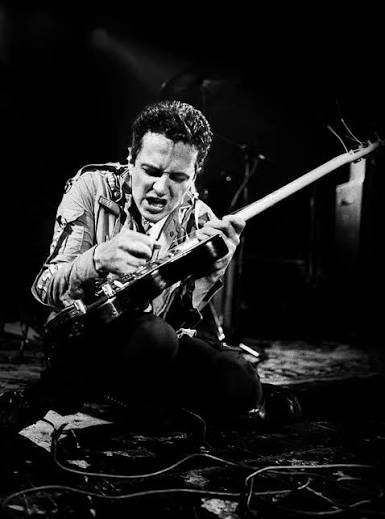
Strummer and his band, the Clash, embodied builder’s integrity. Even as they became a global phenomenon, the Clash maintained a dedication to their values and their fans.
Case in point:
In May 1981, the Clash played a residency at Bonds International Casino in New York City. They scheduled eight shows but the promoter grossly oversold tickets. When the crowds were roughly double the legal capacity, the NYC Fire Department shut down shows.
Like Jim Sinegal, the Clash stuck to their values. They played seventeen shows, nine more than planned, so every single ticket holder got to see them.
Yvon Chouinard faced his own version of the $1.50 hotdog.
He created his iconic company Patagonia almost by accident. It began with a desire for high-quality climbing gear and clothing. He started selling the products to his community, laying seeds for what became a globally renowned billion-dollar company.
Chouinard never wanted to be a billionaire. He did not mean to create a big business. So, like Sinegal and Strummer, he did something unusual. In 2022, he gave his company away.
Chouinard made one of the most radical moves in modern business. Roughly 98% of Patagonia’s shares were transferred to a nonprofit, the Holdfast Collective, while the remaining 2% of voting control was placed in a purpose trust to protect the company’s values.
The result is a fundamentally different kind of enterprise. Profits are now directed toward fighting climate change, the company can no longer be sold or taken public, and its mission is a permanent constraint embedded in the structure itself.
Jerry Garcia didn’t climb mountains or sell $1.50 hotdogs.
But he played a unique style of guitar, mixing folk, bluegrass, psychedelia and jazz improvisation to help create the Grateful Dead’s unique sound.
Like Sinegal, Strummer and Chouinard, Garcia had a deep connection and commitment to his community. So, like Chouinard, he broke the rules of his industry.
The Grateful Dead let fans record their concerts. Rather than crack down on taping, they embraced it. They created designated sections for recorders and encouraged free sharing, as long as no one profited.
What looked like lost revenue became their greatest asset, a self-sustaining network of fans distributing music. They didn’t protect the product. They built a community.
Ian MacKaye is not a dead head.
He came out of the Washington, D.C. punk scene. DIY shows, independent labels, community over profit. But with his band Fugazi, he took that ethos and turned it into something much more rigorous.
Fugazi made a few non‑negotiable choices. Ticket prices stayed low (often around $5), albums were priced affordably, and they never signed to a major label, no matter how much leverage they had. At their peak, Fugazi could have filled arenas or accepted massive deals. They didn’t.
Fugazi built everything around those choices. They toured relentlessly, but kept costs down so they didn’t have to charge more. They released music through Dischord Records, the independent label MacKaye co-founded, so they could control pricing, production, and distribution.
Fugazi avoided traditional merch markups, rejected “rock star” excess, and maintained direct relationships with local promoters and scenes. Even their live shows reflected the same philosophy. All-ages access, respect between band and audience, and a refusal to indulge behavior that undermined the experience.
These are the stories of great builders.
They keep prices low. They pay employees fairly. They partner well with vendors. They play extra shows. They create new governance models. They let fans record shows for free. They stay true to their values and maintain integrity with their communities.
Sinegal. Strummer. Chouinard. Garcia. MacKaye. All took uncompromising positions. All innovated in service of their community. All broke the norms of their industry. They embody builder’s integrity.
What do Costco and The Clash have in common? Talk about a hook! Really interesting piece. I was especially intrigued by the Patagonia story - just phenomenal what he did.
So interesting, these leaders focused on the long term and integrity. It creates trust and faithfulness with the customer. The same focus is critical for personal relationships